AI2 Nexus

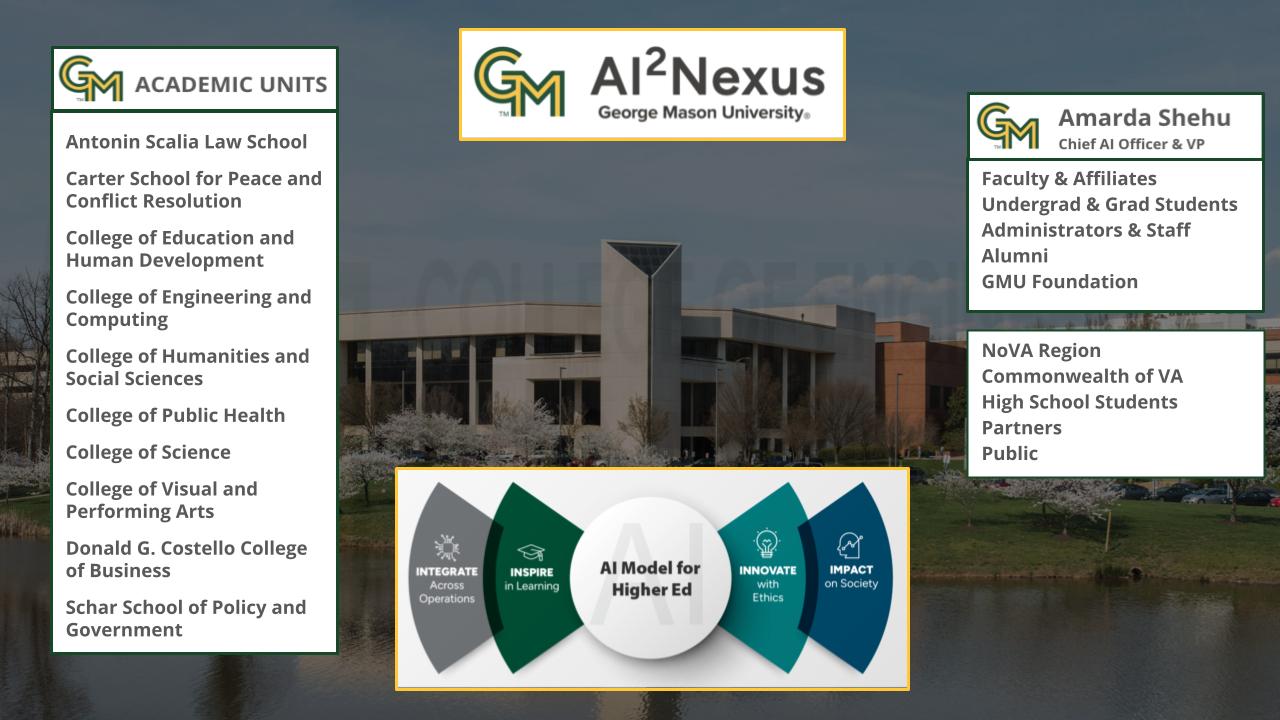
George Mason is building a nexus of collaboration and resources on campus, throughout the region with our vast partnerships, and across the state, called AI2Nexus.

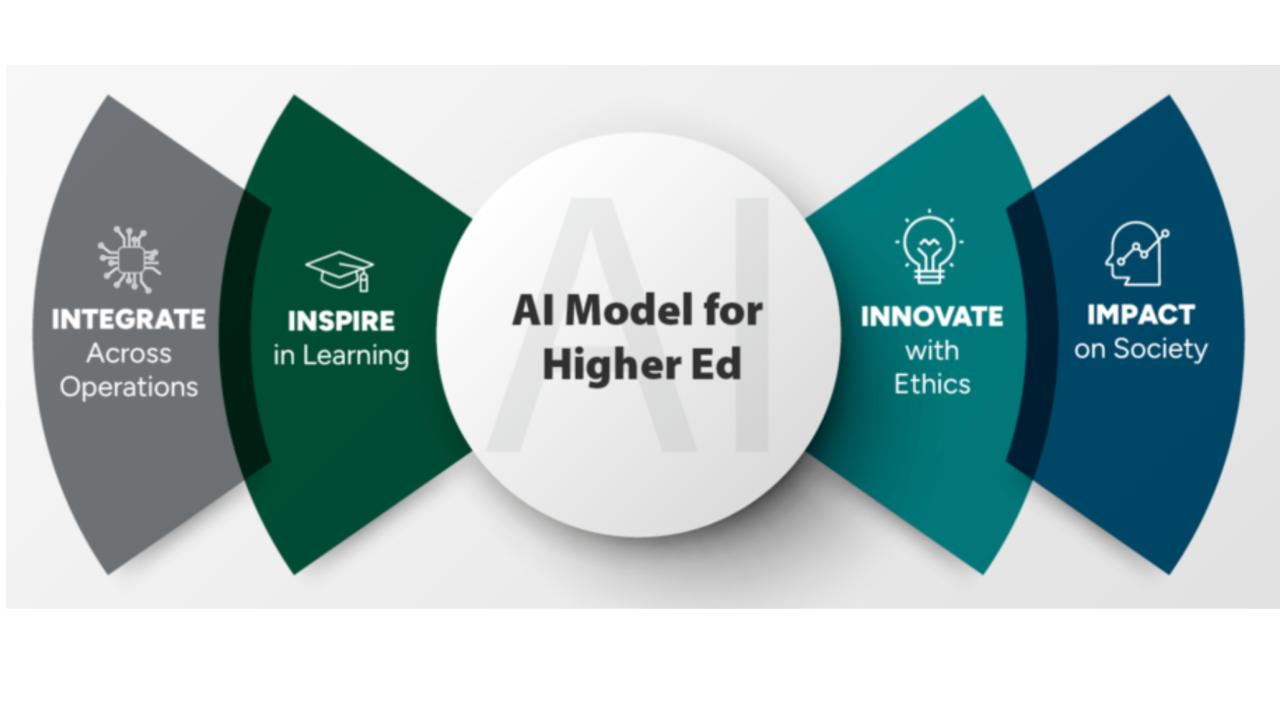
As a model for universities, AI2Nexus is based on four key principles: Integrating AI to transform education, research, and operations; Inspiring with AI to advance higher education and learning for the future workforce; Innovating with AI to lead in responsible AI-enabled discovery and advancements across disciplines; and Impacting with AI to drive partnerships and community engagement for societal adoption and change.

George Mason University is driving rapid AI adoption and advancements across the Commonwealth.

As the largest and most diverse university in Virginia, just outside Washington, D.C., George Mason University is leading the future of inclusive artificial intelligence (AI) and developing responsible models for AI research, education, workforce development, and community engagement within a modern university.

As AI reshapes industries, George Mason combines fearless ideas that harness the technology’s boundless potential to address the world’s grand challenges, while creating guardrails based on informed, transdisciplinary research around ethical governance, regulatory oversight, and social impact.

Led by the university’s inaugural vice president and chief artificial intelligence officer (CAIO) Amarda Shehu with an AI Visioning Task Force, George Mason is reimagining operational excellence in every facet of the university.

Source: AI Webpage

OnAir Post: AI2 Nexus

Amarda Shehu

Shehu is an accomplished administrator, teacher, and scholar. She currently serves as George Mason’s Inaugural VP and Chief AI Officer in which capacity she also continues to provide leadership for the Institute of Digital InnovAtion (IDIA) for which she served as Associate Vice President for Research during 2022 and 2024.

Shehu also serves as an Associate Dean for AI Innovation in the College of Engineering and Computing (CEC), where she is also a tenured Professor in the Department of Computer Science.

Source: CEC webpage

OnAir Post: Amarda Shehu

AI-in-Gov Council

Welcome to the AI-in-Gov Council, launched by George Mason University in partnership with public sector tech providers and leaders of local, state, and federal government agencies.

Why Now?

The rapid evolution of AI and ML technologies, alongside the government’s mandate to implement AI innovations safely and responsibly for the common good, has created an urgent need for structured governance. Government agencies, already highly regulated, rely heavily on public sector tech providers to lead AI initiatives, while ensuring compliance with increasingly complex frameworks.

While recent efforts such as presidential orders and the appointment of Chief AI Officers mark progress, they fall short of addressing uneven acquisition policies and varied agency transparency. The AI-in-Gov Council led by George Mason bridges this gap by fostering collaboration between academia, AI-in-Gov sectors, and government, sharing knowledge, shaping unified policies on AI governance, and positioning the next generation of AI practitioners to engage in well-structured and impactful projects closely aligned with the evolving needs of government AI ecosystems.

Source: CEC Webpage

OnAir Post: AI-in-Gov Council

GMU AI Academics

Inspire AI: Designing Curriculum for the Future Workforce

George Mason is equipping students with AI skills as a leader in developing AI-ready talent ready to compete and new ideas for critical sectors like cybersecurity, public health, and government.  In the classroom, the university is developing courses and curriculums to better prepare our students for a rapidly changing world.

OnAir Post: GMU AI Academics

Master of Science in AI

Launching in Fall 2025, Master of Science in AI

The rapid adoption of artificial intelligence across industries and government is revolutionizing business practices, enhancing public services, and reshaping the workforce. As artificial intelligence transforms an increasing number of economic sectors, decision-making across the government, and daily life, there is a growing demand for professionals who can ethically design, interpret, and deploy artificial intelligence systems

Become an AI Innovator

Enroll in the Master of Science (MS) in Artificial Intelligence, a cutting-edge graduate program in the College of Engineering and Computing. Designed to equip the next generation of AI innovators, this program offers a solid, interdisciplinary education that blends foundational theory with real-world application, preparing graduates to address complex challenges in industry, government, and beyond.

Source: Website

OnAir Post: Master of Science in AI

Ethics and AI Minor

This minor is designed to equip students to tackle the moral complexity of AI-enabled technologies. It provides students with core competencies for thinking critically about the impact of AI in social and global contexts and allows them to apply their knowledge and skills via case studies, debates, and individual or team projects.

The minor seeks to make ethical and social considerations a forethought in the design, development, deployment, and use of AI-related technologies. Given the role of AI-enabled technologies in our increasingly digital society, the minor is of relevance to all Mason students as engaged citizens and offers vital competencies to those planning for careers in such areas as computing and technology, government, public policy, health, law, education, and the media.

OnAir Post: Ethics and AI Minor

GMU Cyber Security Engineering Dept.

As more of the world’s business goes online, digital information has become a primary target, and demand for cybersecurity experts continues to rise. Our deep roots in technology and close ties with government and industry make our graduates highly valued.

We break down silos. Our cybersecurity education and research feature multiple fields of study that extend beyond technological requirements. Study includes a broad array of programs in multiple departments

An urgent need exists for a workforce with advanced technical skills in everything related to security and communications. the CEC’s computing, IT, and engineering programs, with their emphasis on cybersecurity, prepare students to create and maintain crucial information systems that will protect our nation from cyber threats with innovative knowledge and effective tools.

Source: Website

OnAir Post: GMU Cyber Security Engineering Dept.

DAEN – Data Analytics Engineering

George Mason University’s data analytics engineering programs at Volgenau prepare students for their future careers in a growing discipline.

All of our programs are taught by our industry-leading faculty members across schools and colleges in Mason, giving our students the ability to see the numerous possibilities a data-driven degree can offer.

  • Master of Science –– The MS in data analytics engineering is a multidisciplinary degree program at the Volgenau School of Engineering. It provides students with an understanding of the technologies and methodologies necessary for data-driven decision-making.
  • Certificate –– The graduate certificate in data analytics engineering gives students a foundation of basic data analytics and data science principles.
  • Master of Science Online –– The online MS program gives students the flexibility to earn an advanced degree and expand their knowledge in data analytics in an asynchronous format.
  • Certificate Online –– The online graduate certificate in data analytics engineering gives students a foundation of basic data analytics and data science principles with the flexibility of an online asynchronous format.

Data analytics engineering is an expanding field. Therefore, all our programs instruct students on current and innovative tools and prepare them to be adaptable to the future of the field.


Source: GMU

OnAir Post: DAEN – Data Analytics Engineering

Skip to toolbar