Inspire AI: Designing Curriculum for the Future Workforce
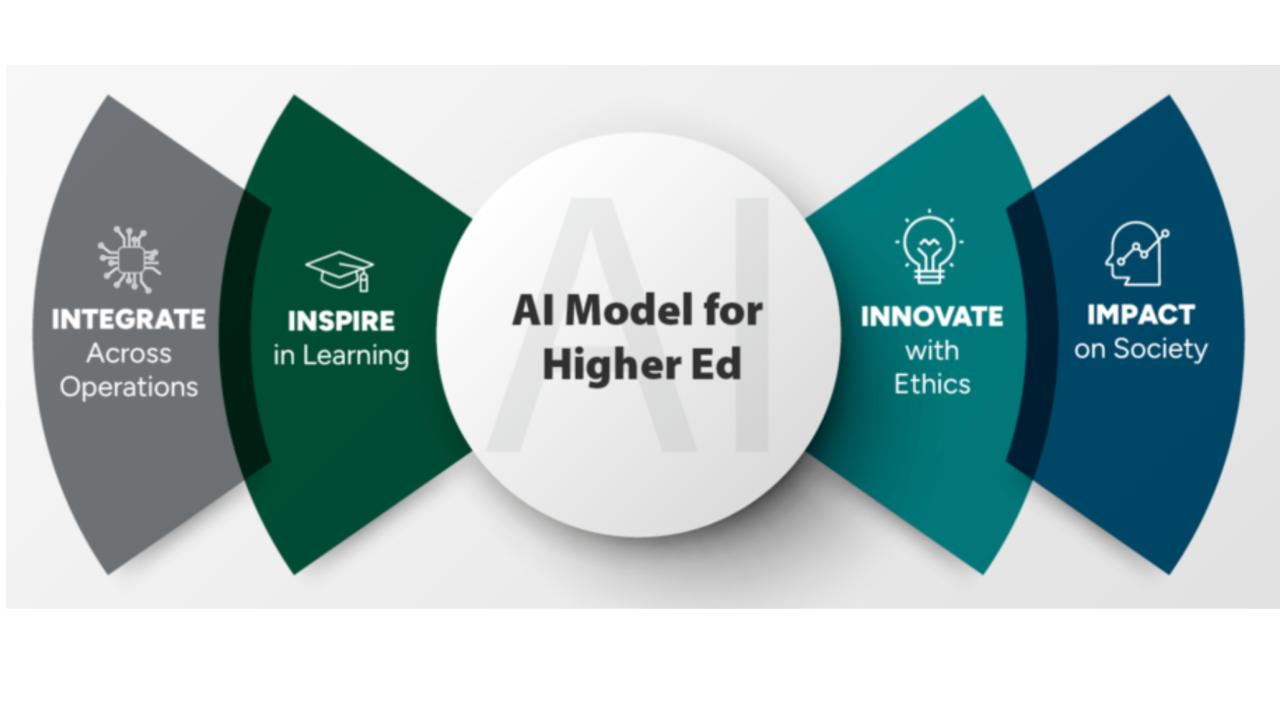
George Mason is equipping students with AI skills as a leader in developing AI-ready talent ready to compete and new ideas for critical sectors like cybersecurity, public health, and government. In the classroom, the university is developing courses and curriculums to better prepare our students for a rapidly changing world.
The rapid adoption of artificial intelligence across industries and government is revolutionizing business practices, enhancing public services, and reshaping the workforce. As artificial intelligence transforms an increasing number of economic sectors, decision-making across the government, and daily life, there is a growing demand for professionals who can ethically design, interpret, and deploy artificial intelligence systems
Become an AI Innovator
Enroll in the Master of Science (MS) in Artificial Intelligence, a cutting-edge graduate program in the College of Engineering and Computing. Designed to equip the next generation of AI innovators, this program offers a solid, interdisciplinary education that blends foundational theory with real-world application, preparing graduates to address complex challenges in industry, government, and beyond.
This minor is designed to equip students to tackle the moral complexity of AI-enabled technologies. It provides students with core competencies for thinking critically about the impact of AI in social and global contexts and allows them to apply their knowledge and skills via case studies, debates, and individual or team projects.
The minor seeks to make ethical and social considerations a forethought in the design, development, deployment, and use of AI-related technologies. Given the role of AI-enabled technologies in our increasingly digital society, the minor is of relevance to all Mason students as engaged citizens and offers vital competencies to those planning for careers in such areas as computing and technology, government, public policy, health, law, education, and the media.
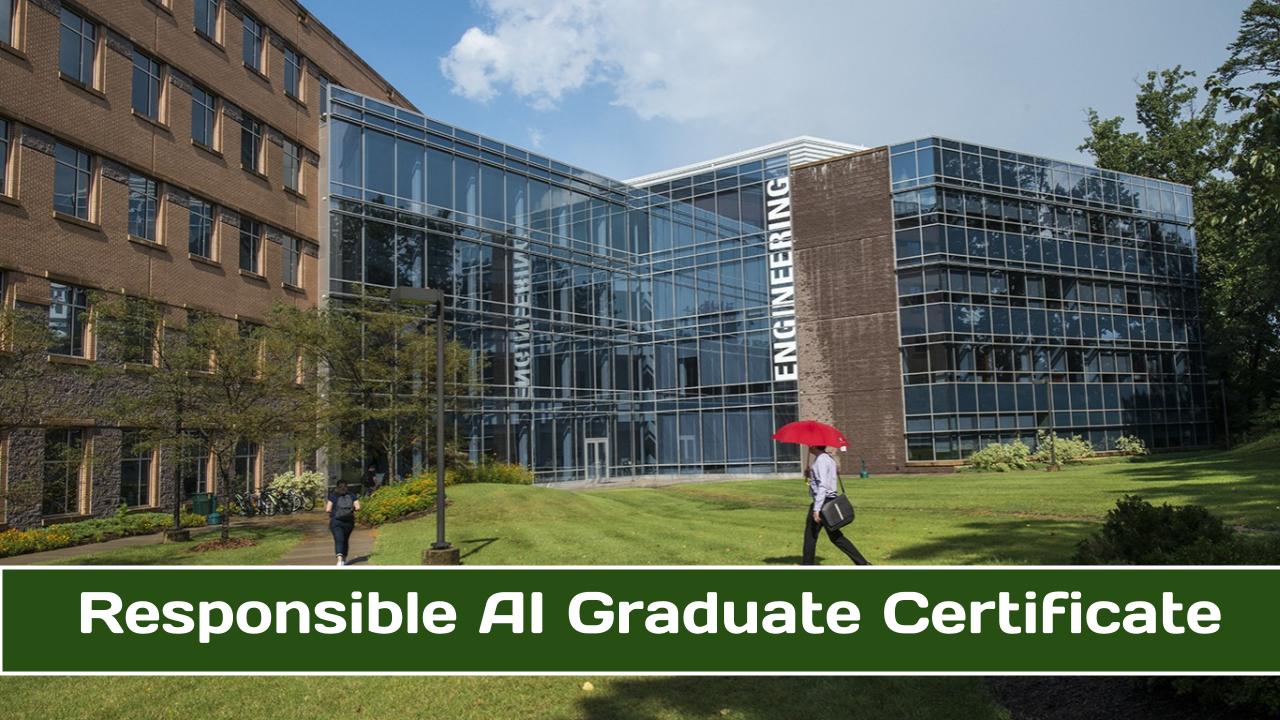
The graduate certificate in Responsible AI provides students with the fundamentals of artificial intelligence (AI), how AI systems are architected, the principles of systems engineering as they relate to AI systems, theories of AI safety and risk, how to test and evaluate such systems to meet risk thresholds, and how to identify ethical, legal and regulatory issues that arise in such systems.
Students will be prepared to develop and manage complex systems with embedded AI, including identifying unique requirements for systems with embedded AI, testing and certifying these systems, and defining and maintaining safe levels of performance for deployed AI. Graduates will also be able to develop acquisition plans for complex systems with embedded AI, and develop AI maintenance programs including auditing. Areas of application include safety-critical physical systems like self-driving cars, air taxis and health applications, as well as software-based systems like financial and banking systems, and those that support education and research.
George Mason University will offer a master of science in artificial intelligence (AI) starting this fall, becoming Virginia’s first public university to offer a stand-alone master’s degree in this field.
Recently approved by the State Council of Higher Education for Virginia (SCHEV), the degree will equip the next generation of AI innovators with a rigorous, interdisciplinary curriculum blending foundational theory with real-world applications, ensuring graduates are prepared to address complex challenges in industry and government.
Amarda Shehu, inaugural vice president and chief AI officer, associate dean for research in the College of Engineering and Computing, and professor in the Department of Computer Science, said, “Seeing this vision come to life has been incredibly rewarding, and I am deeply honored to have led this effort to create a program that will shape the future of AI talent in Virginia and beyond.”
Courses will span core domains such as machine learning foundations and practice; planning and decision-making for intelligent agents; and deep learning fundamentals; providing students with the expertise to build, deploy, and evaluate AI systems across various computing platforms.
“We had to completely rethink how we teach AI to students,” added Shehu. “Rather than hiding such courses behind long chains of prerequisites, the challenge that we answered is how to design these courses to be largely self-containing and yet offer a rigorous foundation in AI.”
Vadim Sokolov, associate professor, Department of Systems Engineering and Operations Research, was one of the leading faculty in the working group designing curriculum. With his mathematics background and his extensive experience teaching the first deep learning course on campus in 2017, Sokolov has great interest in the field and what this means for students. “The idea is students are not just ‘prompt engineers’ but are supposed to understand the basics of the models and be able to tune them and train them for specific tasks.”
Sokolov added that the program is unique in how it enhances this foundation with real-world settings. According to the program, students will be adept in managing the full machine learning operations lifecycle, integrating open-source AI frameworks, and developing secure, scalable AI solutions while effectively collaborating with cross-functional teams and communicating complex AI concepts to diverse stakeholders.
“This program is carefully designed to meet the needs of our community, whether that is government or business, but it also provides a holistic experience to students, from AI ethics to AI policy, and from scalable and secure AI to advanced AI solutions, Sokolov said.
Shehu said, “As AI transforms the way we work, govern, and live, this master’s degree program is more than just a response to demand—it is a commitment to preparing students with both the technical expertise and ethical grounding to shape the future of AI responsibly.”
“I’m going to teach you how to hack a modern car,” said George Mason University professor Tanvir Arafin to the fall 2024 cohort of CYSE 465 Transportation Systems Design. Arafin not only introduced his students to such exciting concepts in transportation security, but he also incorporated the opportunity to participate in a nationwide cybersecurity competition into his course.
The entire class of 12 from the Department of Cyber Security Engineering chose to participate in the optional assignment and several won first, second, and third place at the National Transportation Cybersecurity Competition (NTCC) in November 2024. George Mason’s Finn Schaefer won first place; the team of Noor Mohammed, Sonia Shaukat, Caleb Hughston, and Kayleigh Batchos won second place; and Navraj Singh Gill won third place.
Adobe Stock
The national competition was open to all university students, both undergraduate and graduate, who could participate individually or in teams of up to four, guided by a faculty advisor. This year’s competition was titled “CYBER-CARE Challenge 2024: Securing the Future of Transportation.”
Participants faced a series of cybersecurity challenges, including password cracking, traffic management system exploitation, Vigenère cipher decryption, SQL injection vulnerability identification, cross-site scripting (XSS) attacks, and vehicle trajectory anomaly detection. They had a few weeks to complete the challenges remotely.
Arafin developed CYSE 465 by integrating real-world scenarios and cutting-edge research findings from his lab. He has been working in hardware and cyber-physical systems security with a key focus on cybersecurity issues of autonomous and transportation systems. CYSE 465 covers understanding data, communication, operating systems, control, and security primitives used in today’s vehicles for safe and intelligent control and navigation.
“The course offers a unique perspective on the cyber vulnerabilities that emerge from the security-oblivious modernization of transportation systems,” said Arafin.
While he has taught the course since 2022, this was the first time he incorporated the competition into the course. Arafin noted that such competition participation can greatly enhance students’ resumes, and first-place winner Schaefer, a busy student, greatly appreciated the chance to participate.
“This was actually the first competition that I’ve competed in,” he said, explaining that it’s hard to find time for such activity outside of school and work. Schaefer’s favorite challenge at the NTCC involved assessing vehicle datasets to detect problems or attacks. He drew from his personal interest in machine learning to solve the challenge.
“I’ve worked with machine learning models a lot in my own personal projects, but I’ve never had an applicable use for it,” said Schaefer. “So, it was interesting to actually see my work have real meaning to it for once. I was able to do something pretty cool.”
Through courses like CYSE 465, which bridge the gap between theoretical knowledge and practical application, the Department of Cyber Security Engineering is fostering a new generation of cybersecurity professionals who are well-equipped to secure the future of transportation systems.
“The students’ competition performance is a very compelling argument on the benefits of bringing the results and lessons learned in the research lab directly to the classroom, something many CYSE faculty are doing,” said Paulo Costa, the department’s faculty chair.
The achievements of George Mason students at the NTCC highlight the importance of this approach. By bringing state-of-the-art research directly to the classroom, the Department of Cyber Security Engineering is preparing students to become leaders in the field. As the cybersecurity landscape continues to evolve, the department’s innovative educational strategies will ensure that its graduates are ready to meet the challenges of tomorrow.
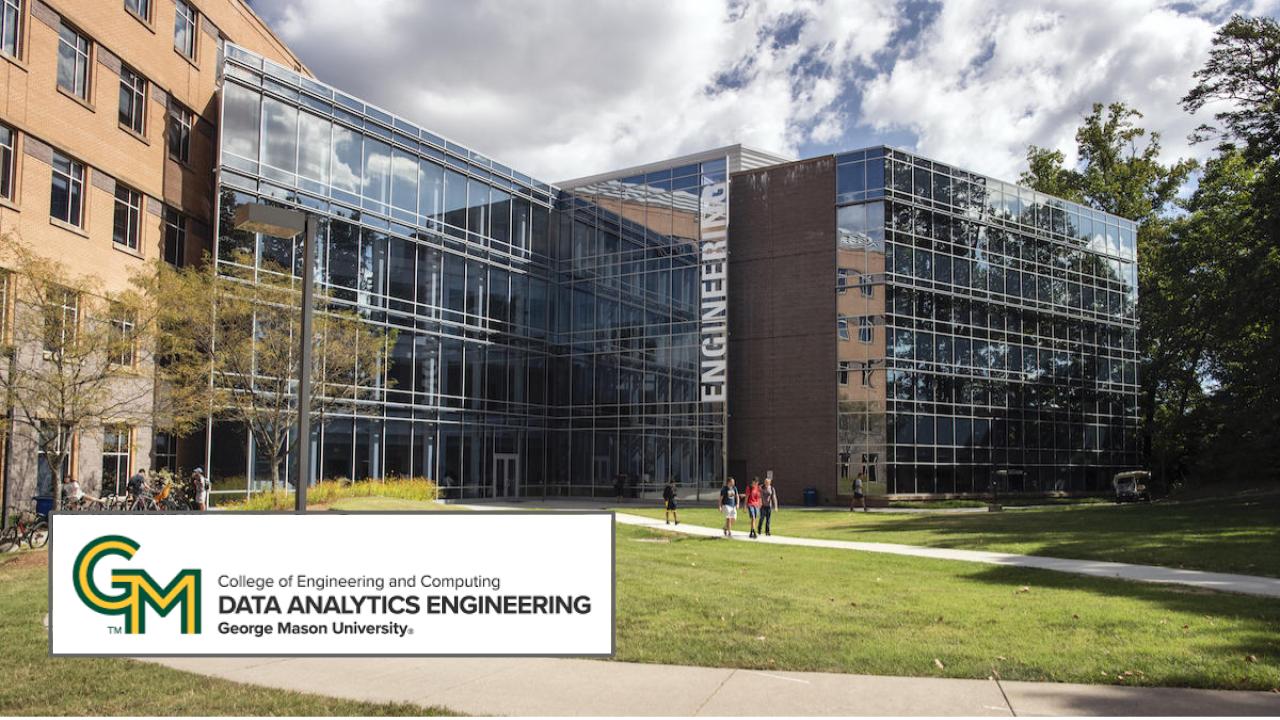
Tim McAliley has navigated a successful career in IT by staying agile and embracing continuous learning. Now, he’s teaching a course at George Mason University to connect data analytics engineering students with challenges set forth by local technology companies, facilitating their professional development alongside their academic growth.
McAliley’s journey from the Marine Corps to academia is a testament to his diverse experiences and dedication to continuous learning. Currently an adjunct professor at George Mason University, McAliley teaches a graduate capstone course in the Master’s in Data Analytics Engineering program, where his extensive real-world experience significantly enhances his teaching.
McAliley’s career began in the Marine Corps before he earned a degree in political science and military science from Florida State University (FSU), graduating in December 1994. In 1999, he transitioned into the information technology (IT) field, earning his Microsoft Certified Systems Engineer certification while working at FSU’s Center for Academic and Professional Development. This certification marked the beginning of a successful career in IT, which included roles in enterprise file storage, network printing, and cloud solutions. Since 2012, he has worked at Microsoft as a cloud solution architect. His role involves various aspects of cloud deployments, including Azure and hybrid solutions.
In addition to his professional career, McAliley has continued to pursue academic success, earning a master’s degree in information management systems from Harvard Extension School in 2023 and enrolling in George Mason’s Information Technology doctoral program this spring. He began teaching the data analytics engineering graduate capstone course in fall 2024. Balancing his full-time job at Microsoft, his teaching responsibilities, and his doctoral studies is no small feat, but McAliley approaches it with the same determination that has characterized his entire career.
Earlier this week, students from George Mason University’s data analytics engineering program competed in the 2023 FAA Data Challenge Forum, using AI strategies to navigate air travel solutions and improvements.
Led by advisor Isaac Gang, associate professor in Mason’s College of Engineering and Computing (CEC), the team tied second place alongside Duke University for their proposal called Modernized Flight Risk Assessment Tool for General Aviation Pre-Flight Planning.
“Congratulations to the Mason data analytics engineering program student team – Hunter Walden, Kathleen Hill, Chi Quinn, Erick Torres – and their advisor Dr. Isaac Gang for being one of 10 finalists selected to compete for the $25,000 top prize in the 2023 FAA Data Challenge Forum,” said Bernard Schmidt, acting director of the MS data analytics engineering program within CEC.
The FAA Data Challenge focuses on the use of AI/Machine Learning and advanced analytics to address aviation-related problems and opportunities. The challenge provides an opportunity for university students to be involved in FAA’s mission, and offer creative, unique solutions for current and future challenges and serve as a pathway for students to become future transportation leaders.
The challenge this year was held at the MITRE campus in McLean, Va.
While the debates continue over artificial intelligence’s possible impacts on privacy, economics, education, and job displacement, perhaps the largest question regards the ethics of AI. Bias, accountability, transparency, and governance of the powerful technology are aspects that have yet to be fully answered.
The master’s degree-level course begins in spring 2025 and will be taught by Jesse Kirkpatrick, a research associate professor in the CEC, the Department of Philosophy, and codirector of the Mason Autonomy and Robotics Center (MARC).
The course is important now, said Kirkpatrick, because “artificial intelligence is transforming industries, reshaping societal norms, and challenging long-standing ethical frameworks. This course provides critical insights into the ethical, societal, and policy implications of AI at a time when these technologies are increasingly deployed in areas like healthcare, criminal justice, and national defense.”
Debates about bias in AI systems, the governance of autonomous decision-making, and the risks of misinformation “underscore the urgency of equipping students and professionals with the tools to address the opportunities and challenges responsibly,” he added.
This course is designed for students and professionals from diverse fields, including policy, computer science, engineering, law, philosophy, and business.
“Occupations such as AI developers, policymakers, ethicists, legal advisors, and technology strategists will benefit greatly,” Kirkpatrick said. “The interdisciplinary approach ensures that participants develop insights applicable across public and private sectors, enabling them to lead responsibly in the AI-driven future.”
The course is open to George Mason students and is a core component of the university’s new graduate certificate in Responsible AI, making it an essential step for those pursuing advanced study or leadership roles in ethical AI design and governance.
In addition to critical readings and written assignments, the course incorporates hands-on components such as workshops, interactive discussions, and practical tools includes algorithmic audits, ethical toolkits, and risk management frameworks.
“Students will also engage in scenario-building exercises and present collaborative projects that apply ethical AI principles to real-world challenges,” Kirkpatrick said. “The course also features distinguished guest speakers from academia, industry, and government, providing students with diverse perspectives on AI.”
As a MARC codirector, Kirkpatrick is engaged in “responsible AI” initiatives. “I bring a unique blend of academic expertise and practical experience,” he said. “My work spans creating ethical AI frameworks, consulting on AI policy, and teaching at the intersection of ethics, technology, and public policy.
He adds, “This course reflects my commitment to equipping students with the knowledge and tools to address the profound ethical challenges and opportunities posed by AI technologies in society.”